

FAQ'S

Its origin

Is Dragon Fruit Mexican?

Yes! Dragon fruit (also known as dragon fruit) has strong ties to Mexico and Mesoamerica. Although it is now grown in many parts of the world, its origins trace back to the Americas, particularly regions of Mexico, Central America, and South America.

In Mexico, dragon fruit has been part of the traditional diet since pre-Hispanic times. Native varieties grow in the country’s arid and semi-arid regions, such as Oaxaca, Puebla, Yucatán, Guerrero, and Jalisco, among others. There are both red dragon fruit varieties (Hylocereus spp.) and pitaya (Stenocereus spp.) , the latter being more traditional in certain Mexican regions and differing in flavor and shape.

What is the difference?

How is it pronounced?

pitaya o pitahaya?

Both are correct, depending on the type of cultivation being referred to. The main difference between pitahaya and pitaya lies in their plant origins and the presence or absence of spines on the fruit.

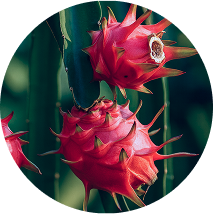
Dragon fruit comes from the Hylocereus plant, has no spines, and its skin can be red or yellow with flesh that is pink, white, red, or yellow.
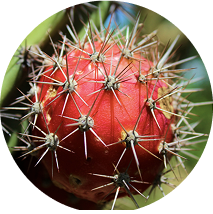
Pitaya, on the other hand, comes from the Stenocereus genus, has spines on its skin, and its flesh can be white, red, yellow, or purple.
What is the difference between

White Flesh and Colored Flesh?

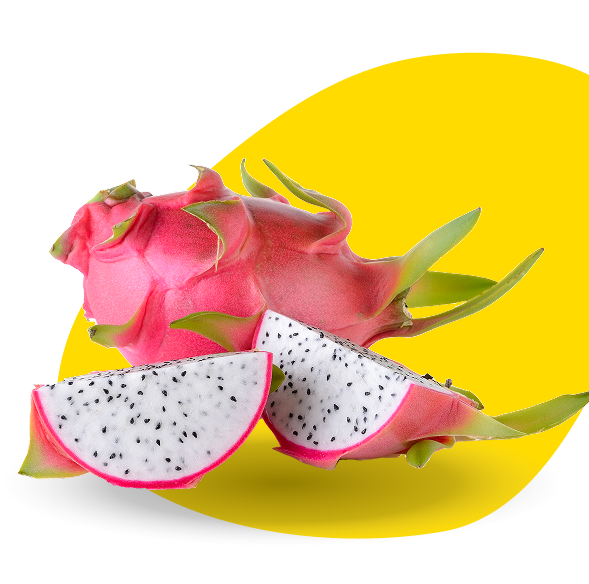
White flesh is ideal for consumers seeking a mild, refreshing, and visually neutral fruit. It has a firm texture similar to kiwi but less acidic, with greater tolerance for transport and storage due to its thicker skin. It is also the most well-known and widely cultivated variety globally. Perfect for hydration, digestion, and low-calorie diets.

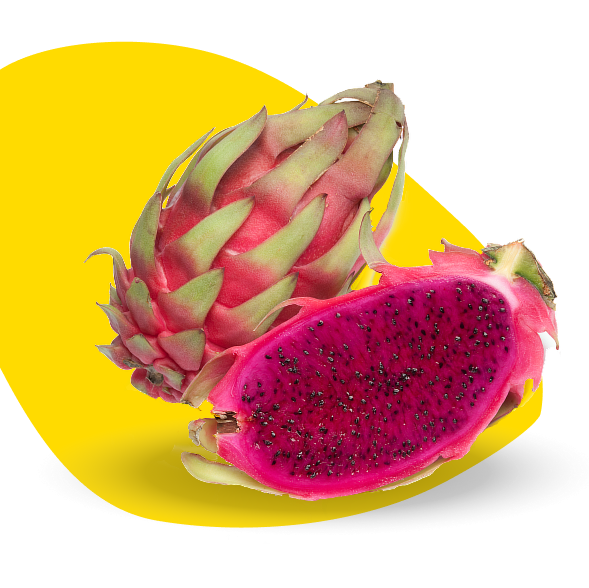
Colored flesh is perfect for those seeking a more intense, sweet, and fruity flavor, with notes similar to red berries (blueberries or raspberries). It has a juicier, sometimes slightly creamy texture and is high in antioxidants, especially betalains. With its thinner skin, it is more delicate than the white variety, visually striking, and is associated with gourmet and premium markets due to its distinctive color and flavor.

Is it considered

SUPERFOOD?

yes

It provides vitamin B2, which helps support the production of red blood cells in the blood.

Vitamin C, which supports collagen formation to improve skin appearance and maintain healthy bones, cartilage, and teeth.

Captine supports heart function, helps remove glucose byproducts, and prevents the onset of cardiac arrhythmias.

HOW TO EAT IT?

Is it peeled?

Is it cut?

Is it bitten?

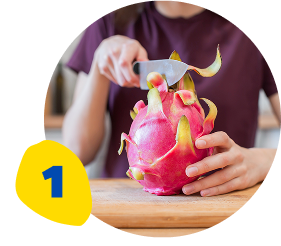
Wash them thoroughly to remove any dirt from the skin.
Cut it in half, either vertically or horizontally.
Gently open it to reveal the flesh.
Scoop out the flesh with a spoon or cut it into segments.
Enjoy the fresh flesh as is, or add it to salads, smoothies, or desserts.
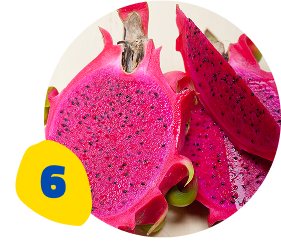
Use the skin to garnish your dishes, following some of our recipes.

What is its

shelf life?

Storage Temperature

We store our dragon fruits packed in a cold room at a temperature of 8°C to 10°C. Relative humidity is carefully controlled to prevent dehydration and weight loss.

Transport Conditions

We maintain the cold chain from packing to the point of sale, always aiming to minimize transit time for our products.

Harvest Maturity

It is harvested at its optimal physiological maturity, neither underripe nor overripe. A dragon fruit harvested too late will deteriorate more quickly.

Postharvest Handling

Careful cutting is performed without damaging the skin or bracts of the dragon fruit. We handle the fruit minimally from the field to packing, avoiding impacts and sun exposure before and after harvest.

How many

Brix degrees does it have?

Our protected agriculture conditions allow us to produce sweeter fruits, thanks to the constant monitoring of our crops’ nutrition and making immediate adjustments whenever necessary.

Optimizing the sugar concentration in the fruit, regardless of the inherent characteristics of our dragon fruit varieties.

How is it harvested?

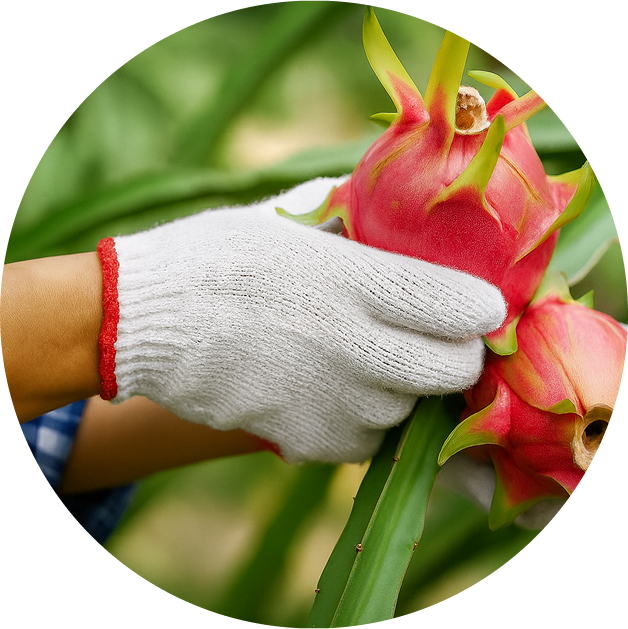
We harvest our dragon fruits following the best agricultural practices, always using sanitized equipment before and throughout the process. Each fruit is carefully hand-cut to avoid damage to the plant’s bracts and spines, preserving the quality and appearance of the product.

The fruits are pre-selected by variety at harvest and picked at their optimal maturity, assessing color and firmness. This combines technical knowledge with artisanal care before moving to the packing area.

How long does it take?

During the season, fruits are harvested daily to ensure freshness and preserve their shelf life.

Which plant

does it come from?

Dragon fruit comes from a climbing cactus plant of the Hylocereus genus. These plants are epiphytic, meaning they grow on other trees, and have fleshy, triangular stems that can reach several meters in length.

In Mexico, there is another cactus species, Stenocereus queretaroensis, which also produces a fruit called “pitaya,” and can be mistaken for dragon fruit.

What is its

PRODUCTION PROCESS?

1) Planting with cuttings:

The cutting planting method uses stems cut in a V-shape; after approximately one week, they are planted, achieving a high survival rate and faster root development.
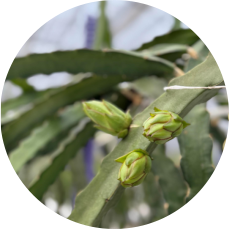
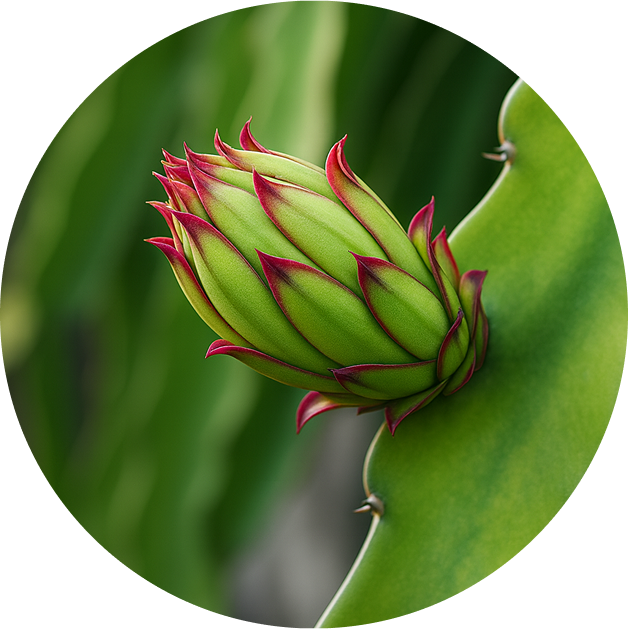
2) Flower Bud Development:

New shoots or cladodes emerge from the areoles. Growth is vigorous under warm temperatures and adequate water availability.
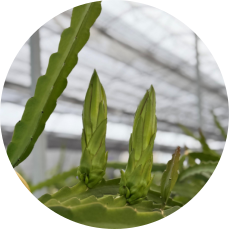
3) Flowering:

The flowers are large, white, and nocturnal (they open at dusk and close at dawn). Pollination occurs naturally by bats and bees, and in some cases, manual pollination is required to ensure fruit set.
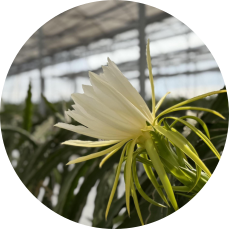
4) Fruit Set and Development:

Once pollinated, the flower transforms into a fruit that develops progressively over 4–6 weeks. The fruit grows rapidly and changes color as it ripens.
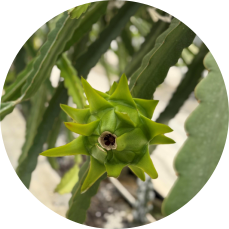
5) Ripening and Harvest:

The fruit is harvested manually using scissors or knives to avoid damage to the plant.

1) Planting with cuttings:

The cutting planting method uses stems cut in a V-shape; after approximately one week, they are planted, achieving a high survival rate and faster root development.

2) Flower Bud Development:

New shoots or cladodes emerge from the areoles. Growth is vigorous under warm temperatures and adequate water availability.

3) Flowering:

The flowers are large, white, and nocturnal (they open at dusk and close at dawn). Pollination occurs naturally by bats and bees, and in some cases, manual pollination is required to ensure fruit set.

4) Fruit Set and Development:

Once pollinated, the flower transforms into a fruit that develops progressively over 4–6 weeks. The fruit grows rapidly and changes color as it ripens.

5) Ripening and Harvest:

The fruit is harvested manually using scissors or knives to avoid damage to the plant.