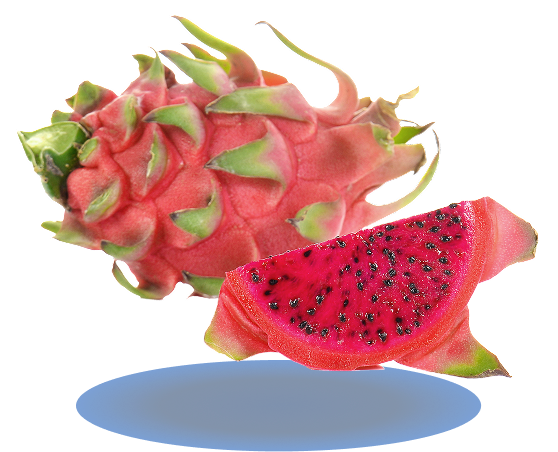
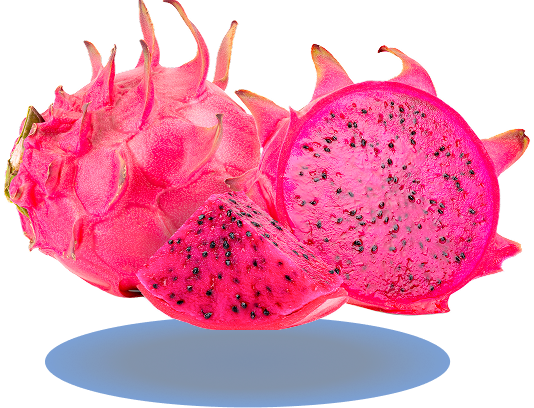
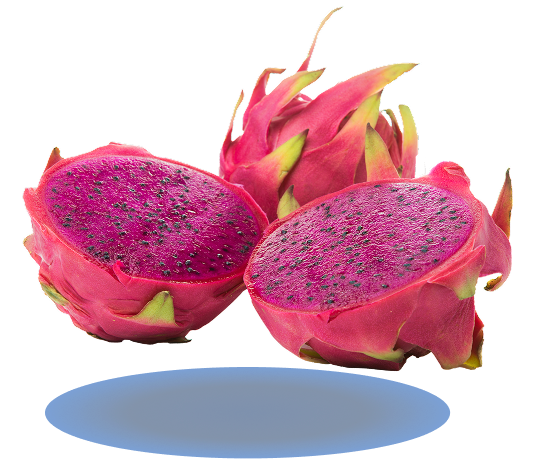
It is an exotic fruit with triangular bracts that give it its unique scaly appearance, with a pleasant and refreshing taste. It is characterized by its striking skin, which can be red or yellow, and its interior contains pulp in various colors with tiny black seeds. It is native to Central America and Mexico, where it has been cultivated since pre-Columbian times.
The soluble fiber found in dragon fruit supports digestion, helps regulate bowel movements, and may contribute to a feeling of fullness.
Rich in antioxidants:
It contains compounds such as betalains and phenols, which help fight free radicals and protect cells from oxidative damage.
Blood sugar regulation:
Dragon fruit has been observed to help regulate blood sugar levels, making it a potentially beneficial option for people with diabetes.
Anti-Inflammatory Properties:
Some studies suggest that dragon fruit may have anti-inflammatory effects, which could be beneficial for individuals with inflammatory conditions.
Immune System support:
Dragon fruit is believed to strengthen the immune system, which may help prevent illnesses and enhance the body’s response to infections.
Low in calories:
Dragon fruit is a perfect choice for weight control diets.
1
Source of Fiber
2
Immune System Support
3
Low in calories
4
Anti-Inflammatory properties
5
Rich in antioxidants
6
Blood sugar regulation
1.Source of fiber:
The soluble fiber found in dragon fruit supports digestion, helps regulate bowel movements, and may contribute to a feeling of fullness.
2.Immune system support:
Dragon fruit is believed to strengthen the immune system, which may help prevent illnesses and enhance the body’s response to infections.
3.Low in calories
Dragon fruit is a perfect choice for weight control diets.
4.Anti-Inflammatory properties:
Some studies suggest that dragon fruit may have anti-inflammatory effects, which could be beneficial for individuals with inflammatory conditions.
5.Rich in antioxidants
It contains compounds such as betalains and phenols, which help fight free radicals and protect cells from oxidative damage.
6.Blood sugar regulation:
Dragon fruit has been observed to help regulate blood sugar levels, making it a potentially beneficial option for people with diabetes.
Discover our
NUTrition FACTS
Dragon fruit is a nutritious fruit, low in calories and rich in fiber, vitamins, and minerals. It primarily provides carbohydrates, mainly in the form of natural sugars and fiber, along with modest amounts of vitamins C and B, as well as minerals such as magnesium, iron, and calcium.
per 100 grams
Calories: Approximately 60 kcal
Protein: About 1 gram
Fat: Less than 1 gram, including saturated, monounsaturated, and polyunsaturated fats
Carbohydrates: Around 13 grams, including natural sugars and fiber
Fiber: Approximately 3 grams
Vitamin C: 5% of the recommended daily value
Iron: 1% of the recommended daily value
Magnesium: 2% of the recommended daily value
Calcium: About 10 mg
Water: 85% of its composition
The different
Varieties of Dragon Fruit
White Flesh
This variety of dragon fruit has pink skin and white flesh with black seeds inside. It is the most common type of dragon fruit and is known for its sweet flavor.
Yellow Flesh
This is a variety from a different genus of dragon fruit, with a distinct flowering and harvesting rhythm. Its fruit has small spines and weighs around 350 grams, much smaller than other varieties. Its flavor is among the most delicious of all dragon fruits and it is also a self-pollinating variety.
Red Flesh
This variety of dragon fruit features a deep red color in both its skin and flesh. It has a more intense flavor than its white counterparts, a texture similar to kiwi, and eating it may stain your fingers.
Pink Flesh
The pink dragon fruit is essentially a red dragon fruit, but with pink flesh instead of red. Its flesh represents a middle ground between the sweeter flavor of red dragon fruit and the milder taste of white dragon fruit.
Fuchsia Flesh
This variety is one of the most striking, both in its exterior and its bright edible flesh. Its flavor is unforgettable, and it is the most consumed dragon fruit in the United States. The fruit typically weighs around 400 grams, and one of its advantages is that it is self-pollinating.